How to Structure an Interview Podcast That Keeps Listeners Hooked Past 10 Minutes
The "interview show" is one of the most popular formats in podcasting, but it is also the easiest to get wrong.
We've all tuned into an episode only to hit "skip" around the eight-minute mark. Why does that happen? Usually, it's because the show follows a predictable, lazy structure: a five-minute reading of the guest's resume, followed by chronological questions ("Where did you grow up?", "What did you study?"), leading into generic, repeated advice.
In 2026, audience attention spans are shorter than ever. If you want listeners to stay hooked past that critical 10-minute drop-off zone, you need an intentional, high-engagement structure. Here is how to map out an interview that retains viewers from the first second to the final frame.
The Anatomy of a High-Retention Interview
An extraordinary interview doesn't just happen; it is engineered. Divide your 45-to-60-minute episode into four distinct, calculated zones.
Zone 1: The Cold Open & High-Stakes Hook (0:00 – 2:00)
- The Mistake: Starting with a 45-second generic music intro, followed by, "Hey guys, welcome back to the channel, today I am joined by..." By the time you introduce the guest, the listener is already gone.
- The Fix: Start with a Cold Open. Take the most dramatic, surprising, or high-value 20-second soundbite from later in the interview and place it at the very beginning.
Example: "We lost 40 Lakhs in forty-eight hours, and I genuinely thought our company was finished. Here is the exact framework we used to rebuild..."
Immediately cut to a brief, high-energy 60-second intro explaining why this guest matters right now and what the listener will learn by staying until the end.
Zone 2: The Context Leap (2:00 – 10:00)
- The Mistake: Spending the first ten minutes asking the guest to tell their entire life story from childhood.
- The Fix: Skip the resume. Your listeners can read their LinkedIn profile. Instead, dive straight into a highly specific, recent turning point or a polarizing topic. Establish the stakes immediately.
Instead of: "Tell us about how you got started in marketing."
Ask: "In your latest article, you stated that traditional SEO is completely dead by mid-2026. That's a massive claim. Why?"
This immediately gets the guest talking about their core passion, breaking the standard script and injecting immediate energy into the episode.
Zone 3: The Deep-Dive & Counter-Intuitive Truths (10:00 – 40:00)
This is where the battle for retention is won. To keep the mid-episode slump from happening, follow three interview rules:
- The "Two-Layer" Follow-Up: Never accept a generic answer. If your guest gives a standard textbook response, peel back the layer. Ask: "That sounds great in theory, but what did the actual execution look like on a Tuesday morning when everything was falling apart?"
- Signposting: Keep the audience oriented. Every 10 minutes, verbally reset the stage for the listener. (e.g., "We've established why the strategy fails. Now let's pivot to the three steps required to fix it.")
- Visual Transitions: If you are publishing a video podcast, ensure the editor switches camera angles or pulls up a close-up reaction shot when the guest drops a major insight. Visual resets keep the brain from tuning out.
Zone 4: The Lightning Round & Punchy Outro (40:00 – 45:00)
End on a high note. Wrap up the heavy intellectual heavy-lifting with a rapid-fire segment. Ask 4-5 short, unconventional questions that require instinctive, quick answers.
- "What is one tool under ₹5,000 you can't live without?"
- "What is a common belief in your industry that you completely disagree with?"
Close the show quickly. Deliver a clear call to action, thank your guest, and end the recording while the energy is still high.
The Hidden Variable: Environment & Chemistry
You can have the best structural script in the world, but if your guest is uncomfortable, the interview will feel stiff.
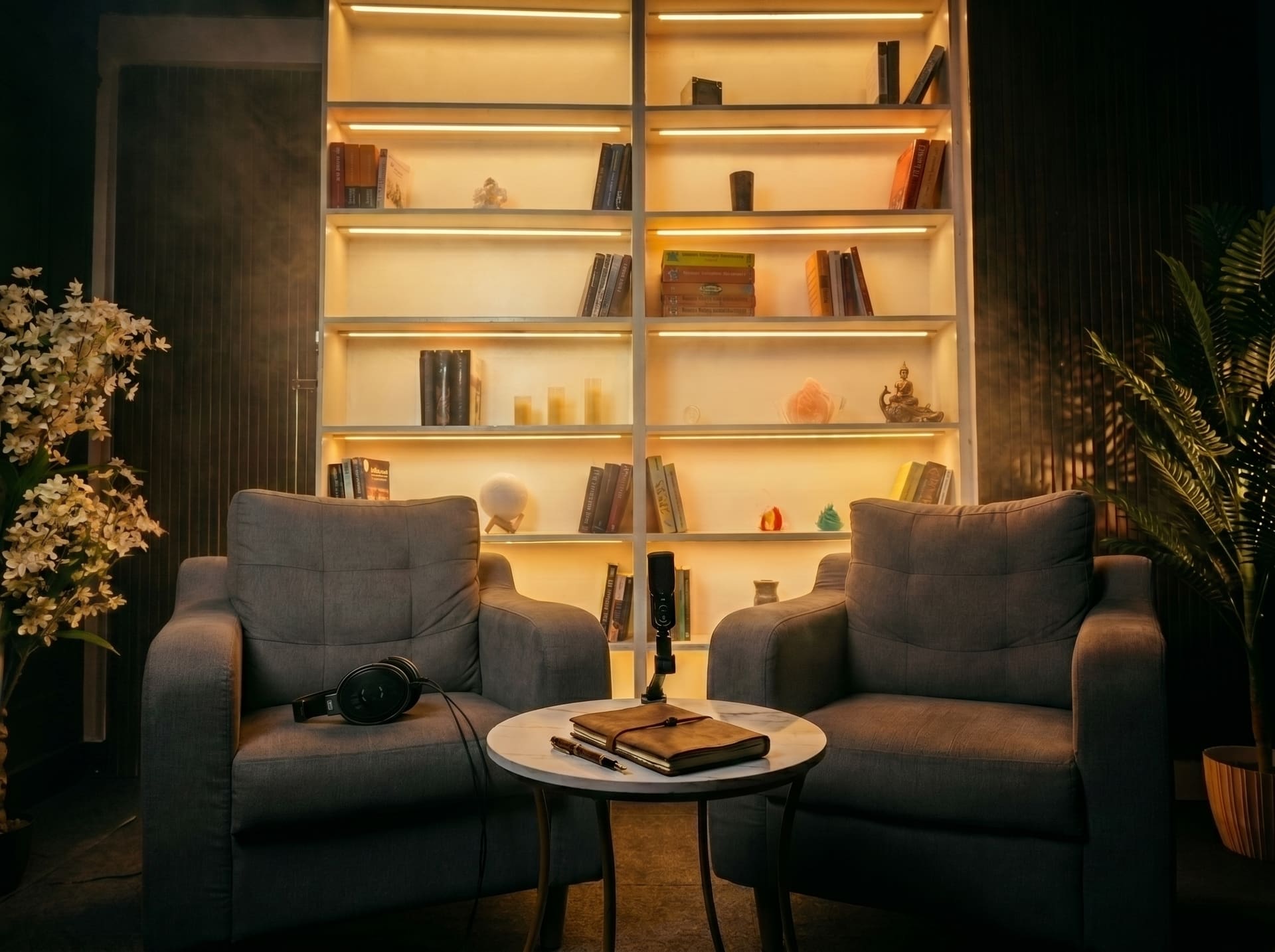
True chemistry requires an environment where both you and your guest can forget about the technical logistics. When a guest steps into a premium, beautifully lit studio space, sits on comfortable furniture, and speaks into professional microphones that don't require them to awkwardly lean forward, their posture relaxes. Their tone shifts from a formal corporate speech to an intimate, authentic kitchen-table conversation.
That authenticity is exactly what keeps a listener hooked past the 10-minute mark.